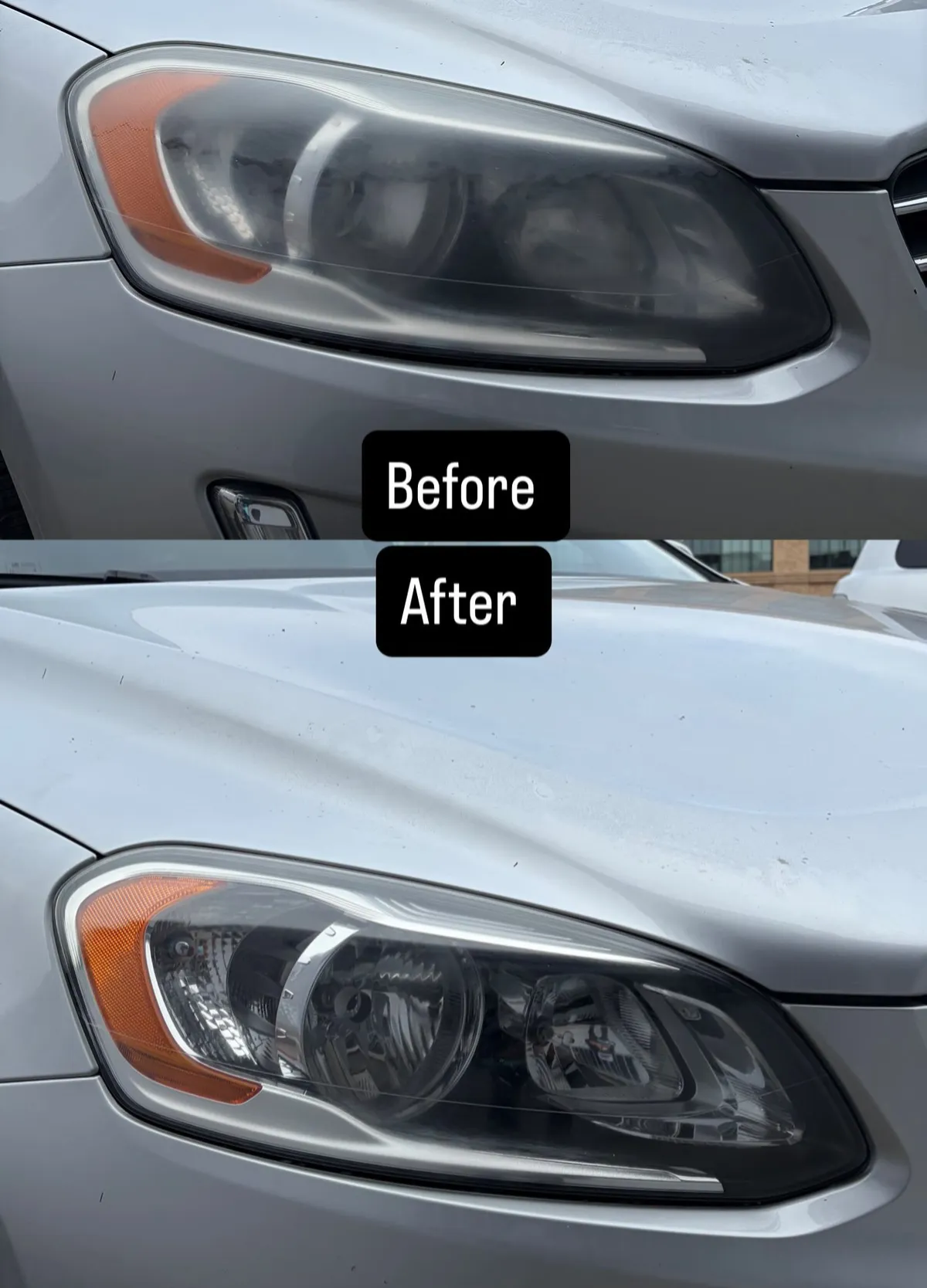
Headlight Restoration: Why Your Cloudy Headlights Need More Than a Wash
Headlight Restoration: Why Your Cloudy Headlights Need More Than a Wash
Your vehicle's headlights do more than improve its appearance. They play an important role in nighttime visibility and help illuminate the road ahead in low-light and poor-weather conditions.
Over time, however, headlights can become yellow, cloudy, hazy, oxidized, or faded.
A vehicle can have a beautiful exterior and still look older than it really is because of heavily oxidized headlights.
Fortunately, cloudy headlights don't always mean you need to replace the entire headlight assembly.
In many cases, professional headlight restoration can dramatically improve the appearance and clarity of the lens.
See what customers are saying about us on Google Reviews. View here.
What Causes Headlights to Turn Yellow and Cloudy?
Most modern headlights use plastic lenses rather than traditional glass.
These plastic lenses are exposed to the elements every day. Over time, the protective outer surface can deteriorate from environmental exposure.
Common causes of headlight oxidation and cloudiness include:
UV exposure from sunlight
Oxidation of the plastic lens
Weather and moisture
Road debris
Dirt and grime
Chemical exposure
Frequent outdoor parking
Age and normal wear
Improper cleaning products or techniques
The UV-resistant coating on a headlight lens can eventually break down. Once that protection deteriorates, the plastic underneath can begin to oxidize and become increasingly hazy.
What Is Headlight Oxidation?
Headlight oxidation occurs when the exterior surface of the plastic lens deteriorates from exposure to oxygen, UV radiation, and environmental conditions.
This often produces the familiar:
Yellow appearance
White haze
Cloudy finish
Dull surface
Rough texture
Milky appearance
Oxidation typically occurs on the outside surface of the lens, which is why professional restoration can often correct the problem without replacing the entire headlight.
Why Does Headlight Clarity Matter?
Cloudy headlights aren't just a cosmetic issue.
A heavily oxidized lens can reduce the amount of light that passes through the headlight assembly and can negatively affect nighttime visibility.
Clear headlights allow the lighting system to perform through a cleaner, clearer lens.
That is especially important when driving:
At night
In rain
On poorly lit roads
On highways
In foggy conditions
In areas with limited street lighting
Headlight restoration is therefore both an appearance improvement and an important part of exterior vehicle maintenance.
Can a Car Wash Remove Yellow Headlights?
Usually, no.
A normal car wash can remove dirt, bugs, road grime, and other surface contaminants, but it doesn't remove the oxidized plastic layer responsible for the cloudy appearance.
This is why a vehicle can be freshly washed and still have yellow or hazy headlights.
Headlight restoration requires a more specialized process designed to remove the damaged outer layer and restore clarity to the lens.
What Is Involved in Professional Headlight Restoration?
A proper headlight restoration is more than simply applying a product to the lens.
The exact process can vary depending on the condition of the headlights, but professional restoration generally involves several steps.
1. Cleaning the Headlight
The headlight lens is thoroughly cleaned to remove dirt, road film, bugs, and other surface contaminants.
2. Masking the Surrounding Paint
The surrounding paint and trim are protected before restoration begins.
This is important because the restoration process may involve abrasive materials and polishing products.
3. Removing Oxidized Material
The damaged and oxidized outer layer of the plastic lens is carefully removed.
Depending on the severity of the oxidation, multiple levels of abrasives may be necessary.
4. Refining the Lens
Once the heavily oxidized material has been removed, progressively finer abrasives can be used to refine the surface.
This helps eliminate the haze and restore a clearer finish.
5. Polishing
The headlight is then polished to improve clarity and appearance.
At this stage, the difference can be dramatic.
A cloudy, yellow lens can become noticeably clearer and brighter-looking.
6. Applying Protection
One of the most important steps is protecting the restored headlight.
Without adequate protection, the newly restored plastic can begin oxidizing again when exposed to UV radiation and the elements.
A proper restoration should therefore include an appropriate protective coating or sealant designed for headlight lenses.
Why UV Protection Is Important After Headlight Restoration
Restoring a headlight removes the damaged surface, but the job shouldn't end there.
The original factory UV protection may have been compromised or removed during years of oxidation and the restoration process.
Without protection, the newly exposed plastic can once again be affected by sunlight and environmental exposure.
That's why UV protection is an important part of maintaining restored headlights.
Proper protection can help extend the life of the restoration and keep the headlights looking clearer for longer.
Headlight Restoration vs. Headlight Replacement
When headlights become yellow or cloudy, many vehicle owners immediately assume they need new headlights.
Depending on the vehicle and the condition of the assembly, that may not be necessary.
If the primary problem is external oxidation or surface damage, professional restoration may be able to significantly improve the existing lens.
Headlight replacement can be considerably more expensive, particularly on newer luxury vehicles where complete headlight assemblies can be costly.
Restoration may offer a practical alternative when the underlying headlight assembly is still functioning properly and the damage is primarily on the exterior lens.
However, restoration cannot fix every headlight problem.
If the lens is severely cracked, damaged internally, leaking, or the lighting components themselves have failed, replacement may still be necessary.
How Do You Know If Your Headlights Can Be Restored?
A visual inspection can usually provide a good indication.
Headlight restoration may be appropriate if your headlights are:
Yellow
Cloudy
Hazy
Oxidized
Dull
Faded
Rough to the touch
Covered in visible surface deterioration
Restoration may be less effective if the damage is located deep inside the housing or if the lens has significant cracking or structural damage.
How Long Does Headlight Restoration Last?
There isn't one universal lifespan for a headlight restoration.
Longevity depends on several factors, including:
Amount of UV exposure
Whether the vehicle is parked outside
Local weather conditions
Quality of the restoration
Type of protective coating applied
How the vehicle is washed and maintained
A vehicle that spends most of its time outside in direct sunlight will generally experience more UV exposure than a vehicle stored in a garage.
Proper maintenance and UV protection can help preserve the clarity of restored headlights.
Can You Restore Headlights Yourself?
DIY headlight restoration kits are widely available, and some can produce noticeable improvements.
However, the biggest challenge is achieving consistent results without creating additional surface defects.
Common mistakes include:
Using the wrong abrasive
Applying uneven pressure
Skipping necessary sanding stages
Failing to properly refine the lens
Leaving sanding marks behind
Polishing inconsistently
Not applying adequate UV protection afterward
The final protective step is particularly important.
A headlight can look excellent immediately after polishing but deteriorate again if it isn't properly protected from UV exposure.
Why Professional Headlight Restoration Makes Sense
Professional detailing equipment and techniques can provide a more controlled restoration process.
A professional detailer can assess the condition of the lens and determine how aggressive the restoration process needs to be.
Not every headlight requires the same treatment.
Some may only need light refinement and polishing, while heavily oxidized headlights may require a more involved restoration process.
The goal is to remove the damaged material while preserving as much of the original lens as possible.
Headlight Restoration for Luxury and Performance Vehicles
Headlights are a major part of a vehicle's overall appearance.
This is especially noticeable on luxury and performance vehicles where the lighting design is often one of the most recognizable parts of the front end.
Cloudy headlights can make an otherwise well-maintained vehicle appear older and less cared for.
Restoring the headlights can help bring back a cleaner, sharper appearance without replacing an otherwise functional headlight assembly.
Whether you're maintaining a BMW, Mercedes-Benz, Porsche, Tesla, Audi, Lexus, Ferrari, Lamborghini, or another premium vehicle, clear headlights can make a noticeable difference in the overall appearance of the vehicle.
Headlight Restoration in Menlo Park and the Bay Area
Vehicles throughout Menlo Park, Palo Alto, Atherton, Redwood City, Mountain View, San Carlos, San Mateo, and the surrounding Peninsula are exposed to significant sunlight and daily driving conditions.
Over time, UV exposure and environmental contaminants can contribute to headlight oxidation.
For vehicles that spend a lot of time outdoors, regular exterior maintenance can help preserve the appearance of the headlights and the rest of the vehicle.
Professional headlight restoration can be a practical option when cloudy or yellow lenses are taking away from your vehicle's appearance.
How to Maintain Your Restored Headlights
Once your headlights have been restored, proper maintenance can help preserve the results.
Consider these simple habits:
Wash the headlights regularly with a quality automotive wash product.
Avoid harsh household cleaners.
Don't aggressively scrub the plastic lens.
Keep the headlights protected with an appropriate UV-resistant product.
Park in a garage or shaded area when possible.
Address new oxidation early rather than allowing it to become severe.
Have the headlights inspected if you notice new cloudiness or discoloration.
A little maintenance can go a long way toward keeping restored headlights clear.
Final Thoughts
Cloudy, yellow, and oxidized headlights can significantly affect the appearance of your vehicle.
More importantly, heavily deteriorated lenses can affect how effectively your headlights illuminate the road.
If the problem is primarily surface oxidation, professional headlight restoration can often improve the clarity and appearance of the existing lenses without the expense of replacing the entire headlight assembly.
The restoration process typically involves cleaning, carefully removing the oxidized surface, refining and polishing the lens, and applying appropriate protection to help defend against future UV exposure.
If your headlights have started to look yellow, hazy, or cloudy, restoration may be worth considering before replacing the entire assembly.
Speak to an expert. 👇
Schedule an Appointment with us here.
Menlo Auto Detailing
Call/Text: (650) 774-3231
Mobile Auto Detailing & Fleet Washing
Menlo Park, CA & Silicon Valley
Learn more: menloautodetailing.com